somanywebdesigns becomes H for DesignThis portfolio is gradually transitioning to H for Design. During this phase, the Somany Webdesigns name may still appear on some pages or links.
UX/UI DESIGN · RESEARCH · UX WRITING
Clarifying user flows, designing interfaces, shaping the experience through words.
I turn complex product needs into clear user flows, usable screens, and actionable UX content — from user research to scalable interfaces.
Three selected projects showing how research, structure, UI design, product language, and brand systems turn complex needs into usable experiences.
UX/UI · Complex SaaS · Critical IoT
V-Hygie
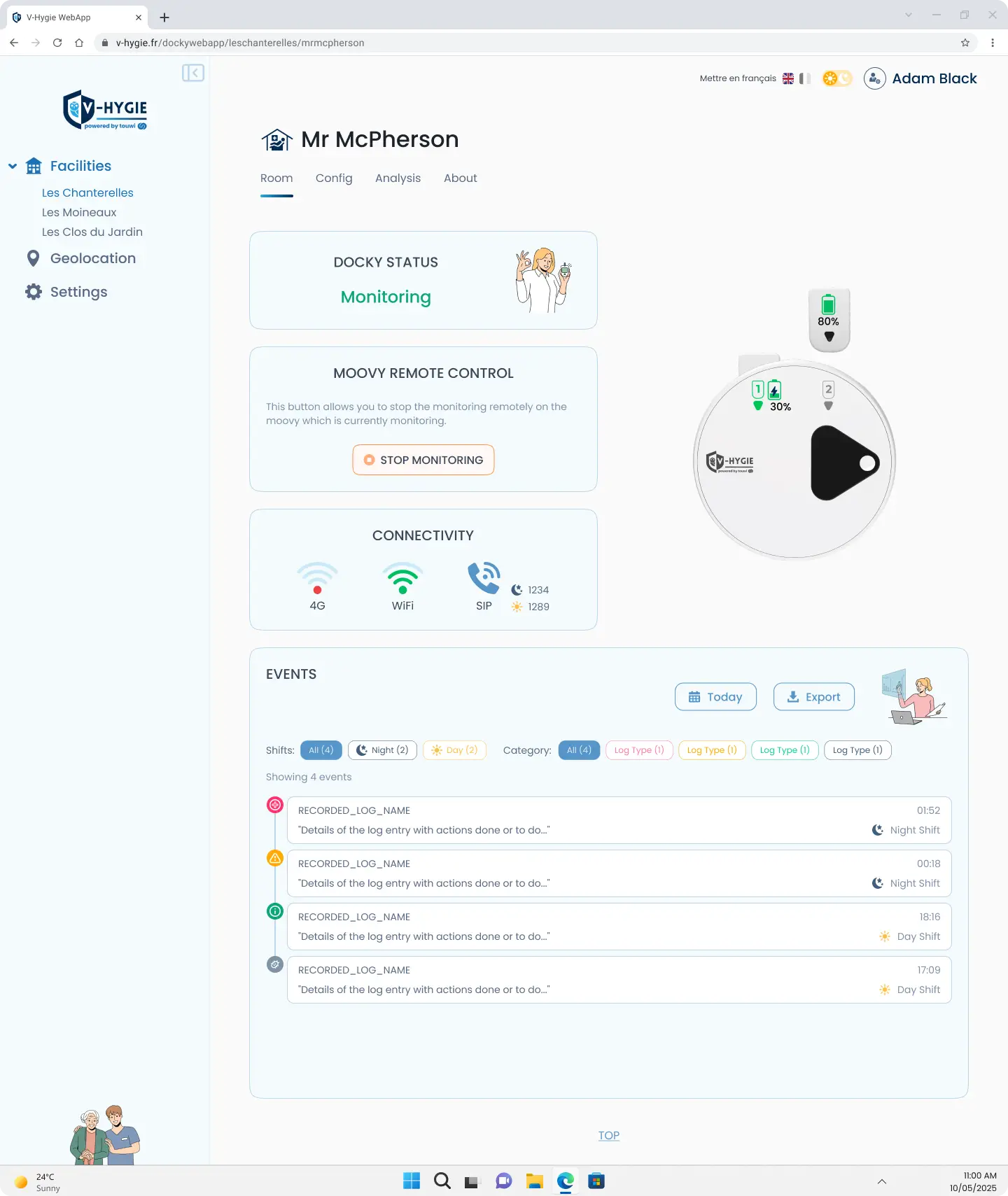
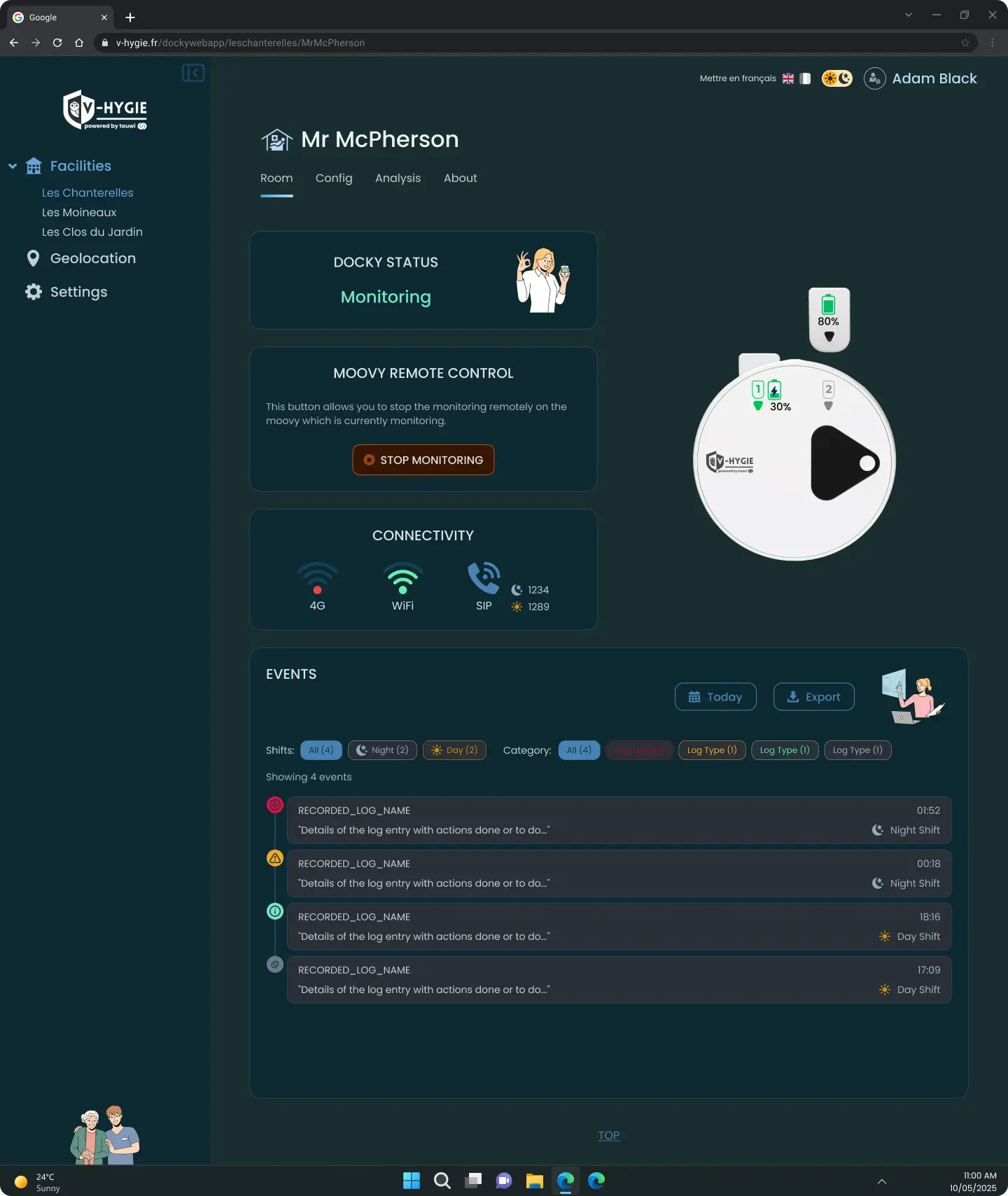
Clarifying an alert ecosystem in a healthcare context. UX/UI design for a bilingual FR/EN SaaS and IoT ecosystem combining a business application, dashboards, admin flows, and on-device alert screens.
The challenge: design an interface that supports three distinct user profiles — care staff, facility administrators, and integrators / super admins — each with different levels of information, control, and decision-making. The goal was to help nursing home teams detect, understand, and handle events quickly while reducing cognitive load in a high-stakes care environment.
Key contributions: information architecture · business application · Docky device screens · multi-profile user flows · alert states · bilingual FR/EN UX
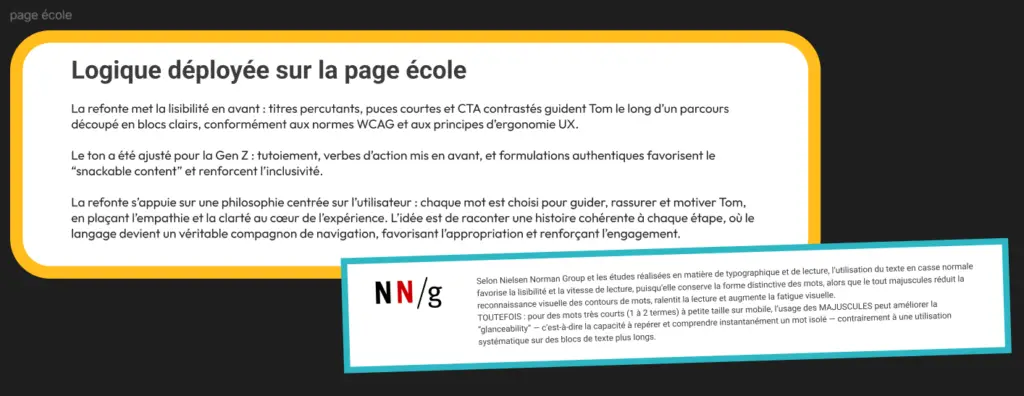
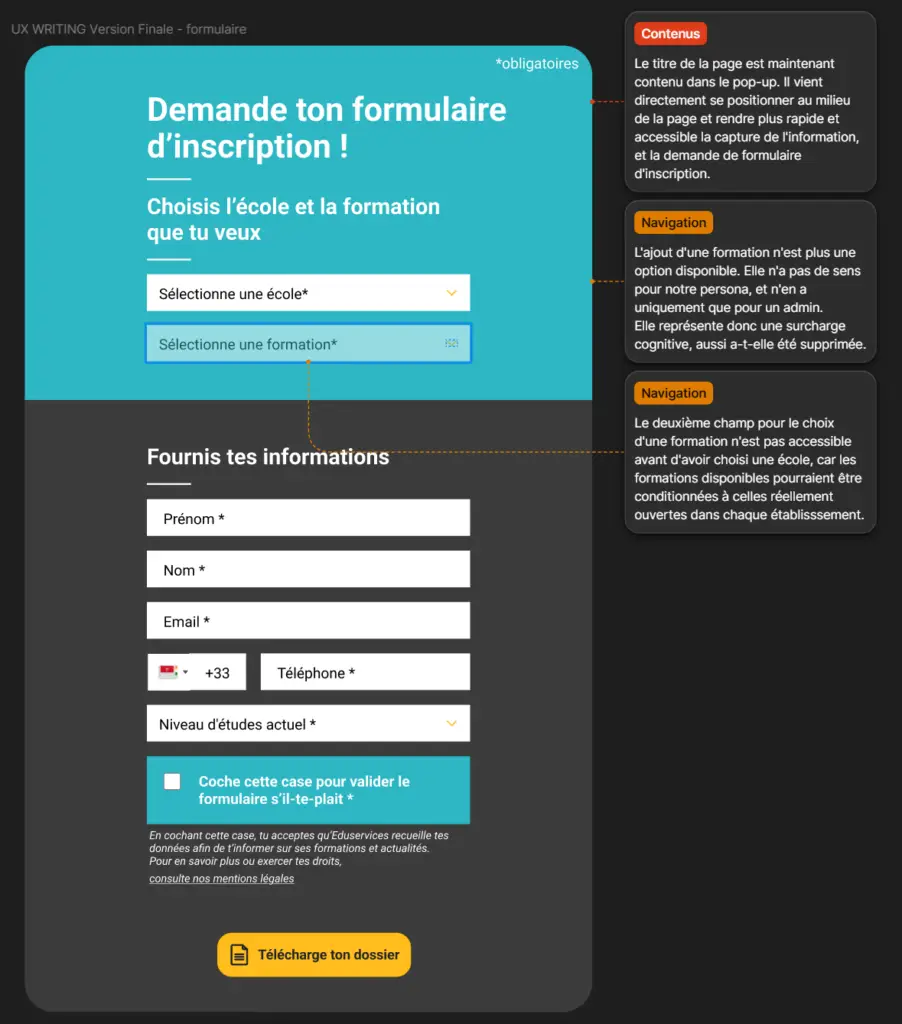
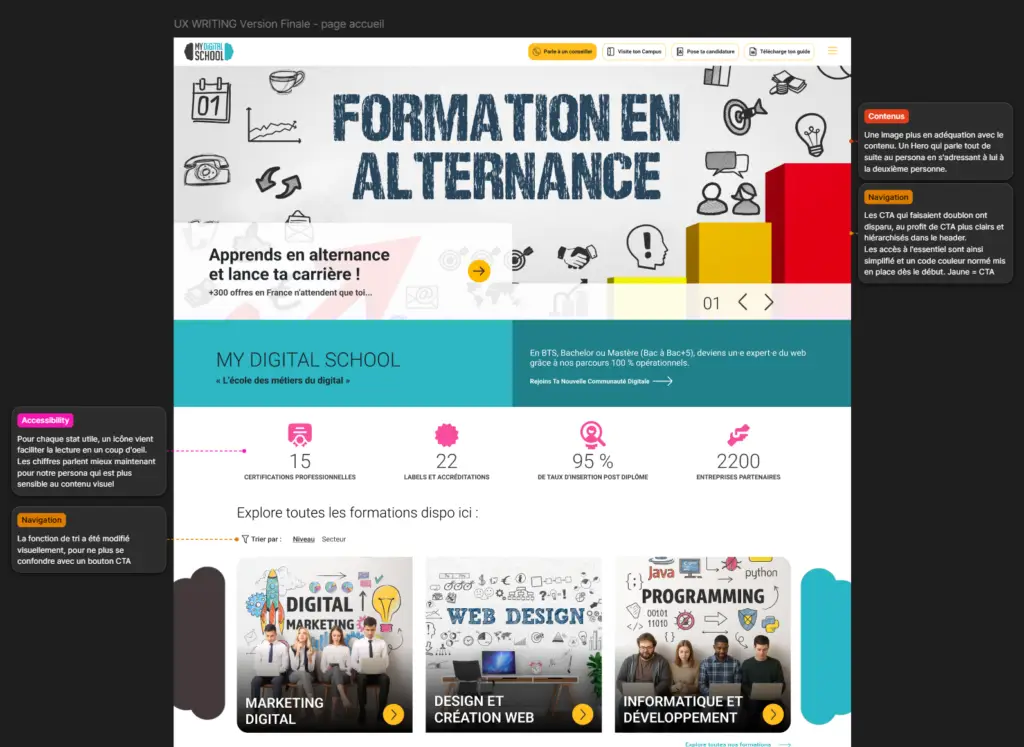
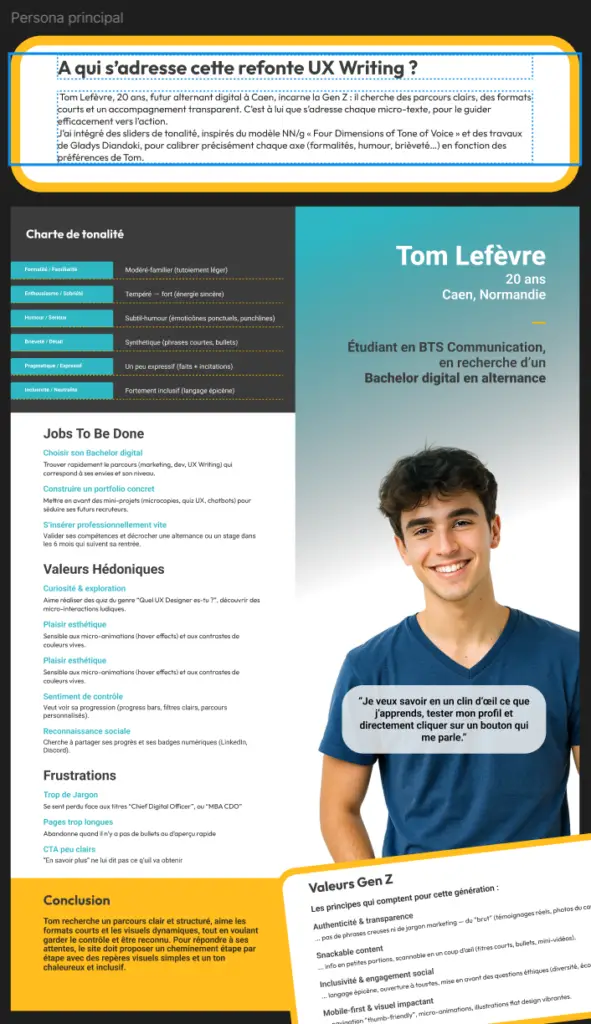
Rewriting a user journey for Gen Z. UX writing redesign for a school website journey, based on a defined persona, mobile-first behaviors, and key friction points. Headlines, section copy, CTAs, microcopy, tone of voice, and editorial hierarchy were reworked and documented to clarify the journey, reduce cognitive load, and guide users more effectively toward action.
The challenge: reduce cognitive load, adapt the tone to a mobile-first student persona, and create a more direct path toward applying or requesting information.
Key contributions: persona · tone of voice · UX content · CTAs · decision documentation
Turning a deeptech identity into a usable brand system. Creation and formalization of a brand system for touwi, covering the logo, color palette, typography, assets, design tokens, tone of voice, and usage rules.
The challenge: help multicultural, distributed teams find the right assets, understand when and how to use them, avoid inconsistent usage through clear dos and don’ts, and maintain long-term consistency across print, digital, and product interfaces.
Key contributions: logo redesign · color palette · typography · assets · tokens · guidelines · dos and don’ts · print and digital applications
I work at the intersection of UX research, interface design, UX writing, and brand systems. My approach fits into agile product cycles: understanding user behaviors, testing assumptions, prioritizing friction points, designing user flows, documenting decisions, and iterating with product and technical teams.
UX Research
Design starts with understanding.
I analyze user behaviors, needs, pain points, and business contexts to ground design decisions in qualitative insights, not assumptions.
User interviews · Discovery workshops · Design thinking · Personas · Empathy maps · User journeys · Usability testing · Heuristic evaluation · Information hierarchy
UX/UI Design
Structuring and clarifying screens.
I turn product needs into structured user flows through iteration, from low-fidelity sketches to polished UI. I test assumptions, clarify screens, and validate design choices before development to help product and technical teams move faster.
Pour offrir les meilleures expériences, Somany Webdesign utilise des technologies telles que les cookies pour stocker et/ou accéder aux informations des appareils. Le fait de consentir à ces technologies permettra le traitement des données telles que le comportement de navigation ou les ID uniques sur le site. Le fait de ne pas consentir ou de retirer son consentement peut avoir un effet négatif sur certaines caractéristiques et fonctions.
Fonctionnel
Always active
Le stockage ou l’accès technique est strictement nécessaire dans la finalité d’intérêt légitime de permettre l’utilisation d’un service spécifique explicitement demandé par l’abonné ou l’utilisateur, ou dans le seul but d’effectuer la transmission d’une communication sur un réseau de communications électroniques.
Préférences
Le stockage ou l’accès technique est nécessaire dans la finalité d’intérêt légitime de stocker des préférences qui ne sont pas demandées par l’abonné ou la personne utilisant le service.
Statistiques
Le stockage ou l’accès technique qui est utilisé exclusivement à des fins statistiques.Le stockage ou l’accès technique qui est utilisé exclusivement dans des finalités statistiques anonymes. En l’absence d’une assignation à comparaître, d’une conformité volontaire de la part de votre fournisseur d’accès à internet ou d’enregistrements supplémentaires provenant d’une tierce partie, les informations stockées ou extraites à cette seule fin ne peuvent généralement pas être utilisées pour vous identifier.
Marketing
Le stockage ou l’accès technique est nécessaire pour créer des profils d’internautes afin d’envoyer des publicités, ou pour suivre l’internaute sur un site web ou sur plusieurs sites web ayant des finalités marketing similaires.